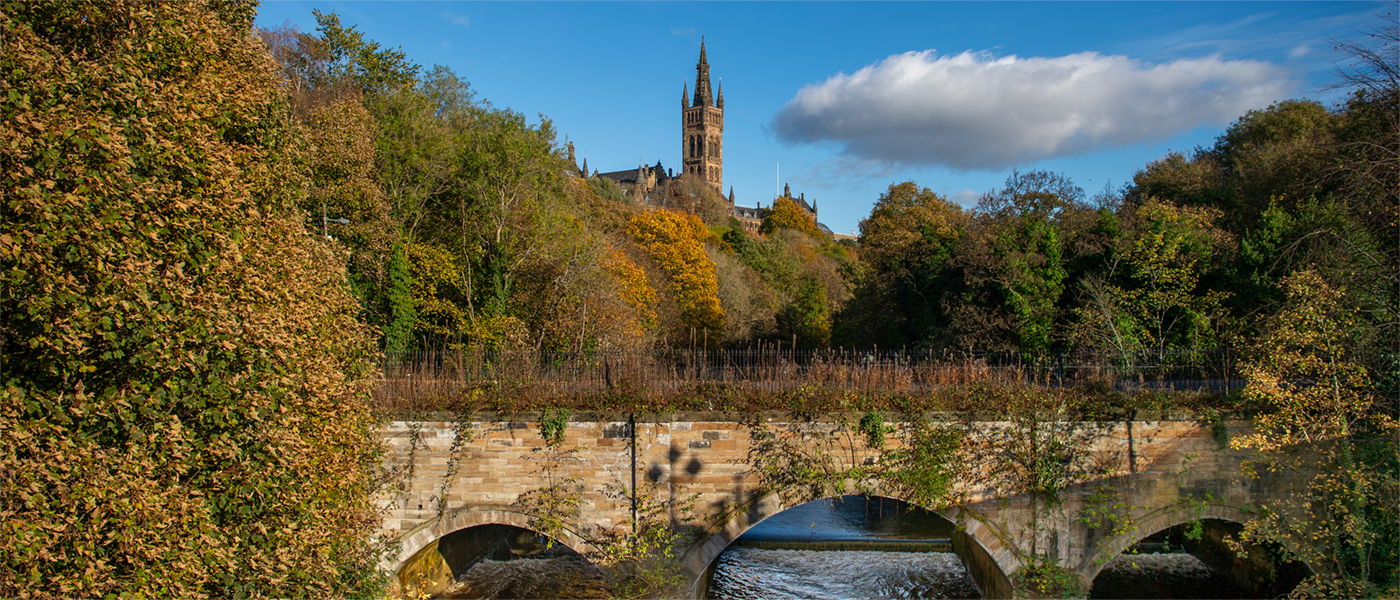
Veterinary Biosciences BSc/MSci
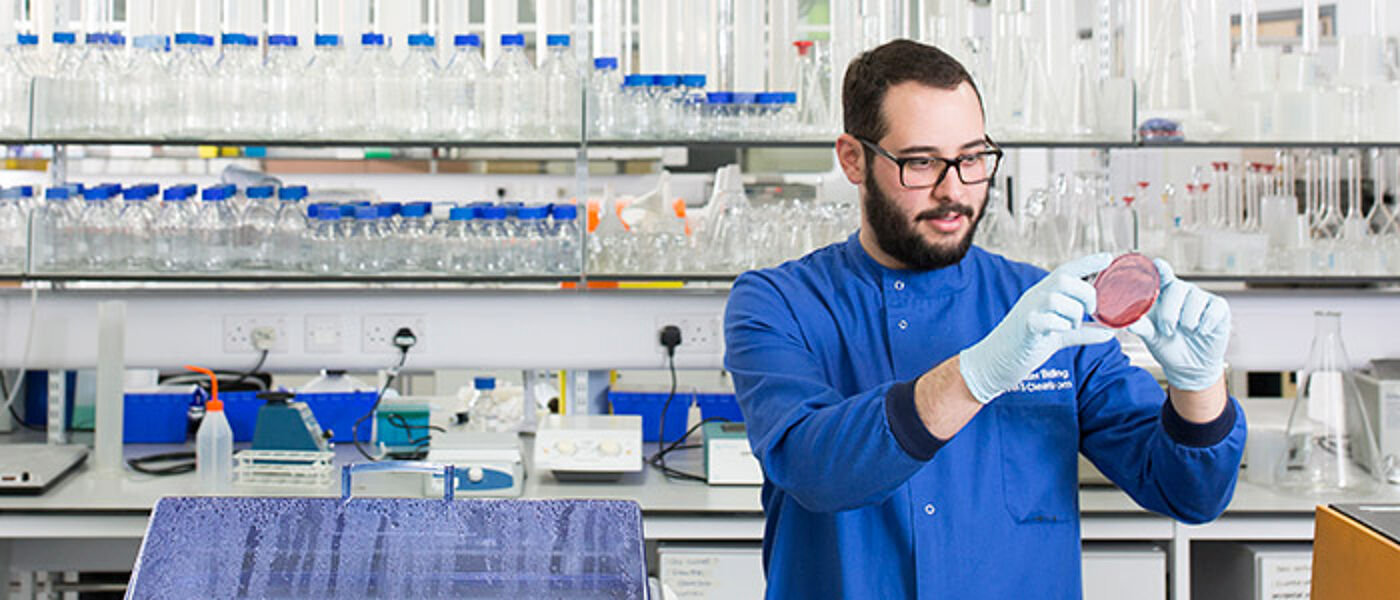
Veterinary biosciences is a biological sciences programme designed to provide you with a strong understanding of the key elements that underpin all modern biological sciences, with a major focus on the biology of health and disease in animals.
The Veterinary Biosciences programme offers residential national and international field courses and non-residential field trips. There is a variety of field work, summer research projects and volunteering possibilities available within and beyond the University and many vibrant student societies available on campus.
Glasgow is ranked 1st in the UK for Animal Science (The Times & Sunday Times Good University Guide 2026).
- September start
- Session dates
- Veterinary Biosciences BSc (Hons): D300 4 year degree
- Veterinary Biosciences MSci: 5 year degree
Applications to the MSci are not taken via UCAS: you may apply for transfer mid-BSc.
Why study Veterinary Biosciences?
These degrees encompass a broad range of topics related to animals and the science behind the veterinary care of domestic and companion animals and wildlife species. This will include comparative anatomy, physiology, farm and companion animal management, infection and immunity, oncology, hormones and behaviour and animal welfare and conservation.
In this programme you will learn about the science that underpins the biology of animal health and disease. Alongside specialist subject knowledge you will develop a range of core transferable skills. These skills include effective communication, collaboration and reflective learning.
You will also acquire scientific research skills including laboratory-based practical skills, statistics and data handling. In addition, you will have the opportunity to conduct an independent research project in the final year of the programme.
The programme is largely based within the Garscube campus. As such you will have access to our working farm, with opportunities to gain experience of large and small animal handling, as well as our world-leading small animal and equine hospitals.
Programme structure
Year 1
In year 1 you will study a range of subjects including animal anatomy & physiology, chemistry and biology.
Year 2
You will study the principles of animal management, physiology and molecular sciences and receive training in basic research skills.
Year 3
You will study aspects of the physiology of behaviour and the pathogenesis, diagnosis and management of disease and develop an appreciation of current challenges in these fields. You will also acquire skills in research and diagnostic technologies.
Year 4
In the final year of the programme you will develop advanced professional and quantitative skills and study population medicine, epidemiology and animal welfare & conservation.
The second semester features a full-time 12-week research project at the School of Biodiversity, One Health & Veterinary Medicine or another approved institution within the UK or overseas.
MSci
You can take Veterinary Biosciences as an MSci, which includes an additional placement year, between year 3 and the final year of the degree. This is normally spent conducting research in industry or a research institute in the UK or overseas.
Programme alteration or discontinuation
The University of Glasgow endeavours to run all programmes as advertised. In exceptional
circumstances, however, the University may withdraw or alter a programme. For more information,
please see: Student contract.
Special Glasgow feature
The Veterinary Biosciences programme at Glasgow is run in collaboration with associated research institutes across both Gilmorehill and Garscube campuses. The School of Biodiversity, One Health & Veterinary Medicine has its own working farm, the Scottish Centre for Production Animal Health & Food Safety large animal facility, Weipers Centre Equine Hospital and Small Animal Hospital, and the Scottish Centre for Ecology & the Natural Environment, on the banks of Lock Lomond, for use in teaching and practical sessions.
Entry requirements
for entry in 2027
Summary of entry requirements for Veterinary Biosciences
Scottish Higher Entry Requirements
- ABBB at S5 will be considered. Typically S6 entrants will have AAAAA Higher or AAAA Higher + B Advanced Higher
- Additional requirements: Higher Biology or Chemistry.
Scottish Higher Adjusted Entry Requirements* (by end of S6)
- MD20: BBBB (also other target groups*)
- MD40: AABB (ABB S5 minimum for consideration)*
- Additional requirements: Higher Biology or Chemistry. Successful completion of Top-Up or one of our Summer Schools.
* See Access Glasgow for eligibility.
A-level Standard Entry Requirements
- AAB – BBB
- Additional requirements: A-level Chemistry or Biology.
IB Standard Entry Requirements
- 34 (6,5,5 HL)
- Additional requirements: HL Chemistry or Biology.
Advanced Entry into Level 2
- Advanced Higher AA, A-levels A*AA
- Additional requirements: Chemistry and Biology at A.
- Biology based HNC/HND or other institutional study considered on a case by case basis.
Admissions guidance
Glasgow International College
International students with academic qualifications below those required should contact our partner institution, Glasgow International College, who offer a range of foundation certificates.
English language
For applicants from non-English speaking countries, as defined by the UK Government, the University sets a minimum English Language proficiency level.
English language requirements
International English Language Testing System (IELTS) Academic and Academic Online (not General Training)
- 6.5 with no subtests under 6.0
- IELTS One Skill Retake Accepted
- Tests must have been taken within 2 years 5 months of start date. Applicants must meet the overall and subtest requirements using a single test.
+++
Common equivalent English language qualifications for entry to this programme
TOEFL (ibt, mybest or athome)
Tests taken up to 20 January 2026
- 90 Overall, no subtest lower than Reading 20; Listening 19; Speaking 19; Writing 21
- Tests must have been taken within 2 years 5 months of programme start date. Applicants must meet the overall and subtest requirements using a single test, this includes TOEFL mybest.
Tests taken from 21 January 2026
- 92 Overall, no subtest lower than Reading 22; Listening 20; Speaking 23; Writing 21
- Tests must have been taken within 2 years 5 months of programme start date. Applicants must meet the overall and subtest requirements using a single test, this includes TOEFL mybest.
Pearsons PTE Academic
- 59 with minimum 59 in all subtests
- Tests must have been taken within 2 years 5 months of start date. Applicants must meet the overall and subtest requirements using a single test.
Cambridge Proficiency in English (CPE) and Cambridge Advanced English (CAE)
- 176 overall, no subtest less than 169
- Tests must have been taken within 2 years 5 months of start date. Applicants must meet the overall and subtest requirements using a single test.
Oxford ELLT
- 7 overall with no subtest less than 6
- Tests must have been taken within 2 years 5 months of start date. Applicants must meet the overall and subtest requirements using a single test.
LanguageCert Academic SELT
- 70 overall with no subtest less than 60
- Tests must have been taken within 2 years 5 months of start date. Applicants must meet the overall and subtest requirements using a single test.
Password Skills Plus
- 6.5 overall with no subtest less than 6.0
- Tests must have been taken within 2 years 5 months of start date. Applicants must meet the overall and subtest requirements using a single test.
Trinity College Tests
- Integrated Skills in English II & III & IV: ISEII Distinction with Distinction in all sub-tests
- Tests must have been taken within 2 years 5 months of start date. Applicants must meet the overall and subtest requirements using a single test.
University of Glasgow Pre-sessional courses
- Tests are accepted for 2 years following date of successful completion.
School Qualifications
- IGCSE English First Language, grade C
- IGCSE English Second Language, grade A
- A Level English, grade C
- International Baccalaureate English A SL5 or HL5
- International Baccalaureate English B SL6 or HL5
- SQA National 5 English or ESOL, grade B
- SQA Higher English or ESOL, grade C
International School Qualifications
- Brunei: O-Level English Language 1120 grade B and above
- Denmark: Studentereksamen English at 7
- European Baccalaureate: English as Language 1 pass, if taken as Language 2 grade 7, if taken as Language 3 grade 7.5
- Finland: Ylioppilastutkinto / studentexamen English grade C or 4
- France: International Option Baccalaureate (OIB) / Baccalauréat Français International (BFI) grade 12
- Gambia, Ghana, Liberia, Nigeria, Sierra Leone: West African Examination Council (WAEC) / Senior Secondary School Certificate English grade C6
- Germany: German Abitur English Grade 11
- Hong Kong: Hong Kong Diploma of Secondary Education, English Language grade 4
- India: Central Board of Secondary Education (CBSE) / All India School Certificate (ISC) English at 80%
- Kenya: Kenya Certificate of Secondary Education (KCSE) English grade B
- Netherlands: Voorbereidend Wetenschappelijk Onderwijs (VWO) grade 7
- Norway: Vitnemal English grade 4 or above
- Singapore: Cambridge International O Level English Language (1128 Singapore only) at Grace C; Singapore Integrated Programme Secondary 4 English Language at grade B
- South Africa: National Senior Certificate (NSC) / Independent Exam Board (IEB) Grade 4 (English as Home Language) OR Grade 4 (English as First Additional Language)
- Sweden: Avgangsbetyg / Fullständigt Slutbetyg fran Gymnasieskolan English grade VG
- Zimbabwe: Zimbabwe General Certificate of Education at English at Ordinary Level grade C
---
+++
Alternatives to English Language qualification
- Degree from majority-English speaking country (as defined by the UKVI including Canada if taught in English)
- students must have studied for a minimum of 2 years at Undergraduate level, or 9 months at Master's level, and must have completed their degree in that majority-English speaking country within the last 6 years.
- Undergraduate 2+2 degrees from majority-English speaking country (as defined by the UKVI including Canada if taught in English)
- students must have completed their final two years study in that majority-English speaking country within the last 6 years.
For international students, the Home Office has confirmed that the University can choose to use these tests to make its own assessment of English language ability for visa applications to degree level programmes. The University is also able to accept UKVI approved Secure English Language Tests (SELT) but we do not require a specific UKVI SELT for degree level programmes. We therefore still accept any of the English tests listed for admission to this programme.
---
+++
Pre-sessional courses
We would strongly encourage you to consider the pre-sessional courses at the University of Glasgow's English for Academic Study (EAS) Unit. Our Pre-sessional courses are the best way to bring your English up to entry level for University study. Our courses give you:
- direct entry to your University programme for successful students (no need to take IELTS)
- essential academic skills to help you study effectively at University
- flexible entry dates so you can join the right course for your level.
For more detail on our pre-sessional courses please see:
- English for Academic Study: Pre-sessional courses
We can also consider the pre-sessional courses accredited by the below BALEAP approved institutions to meet the language requirements for admission to our postgraduate taught degrees:
- Heriot Watt
- Kingston Upon Thames
- Middlesex University
- Manchester University
- Reading University
- Edinburgh University
- St Andrews University
- UCL
- Durham
---
International English Language Testing System (IELTS) Academic module (not General Training)
- 7.0 with no sub-test under 7.0
- This must be a recent test: the required score must have been achieved within the last two years at the point we consider your complete application
- IELTS One Skill Retake accepted.
Pre-sessional courses
The University of Glasgow accepts evidence of the required language level from the English for Academic Study Unit Pre-sessional courses. We also consider other BALEAP accredited pre-sessional courses:
- English for Academic Study: Pre-sessional courses
FAQs
What do I do if...
my language qualifications are below the requirements?
The University's School of Modern Languages and Cultures offers a range of Pre-sessional courses to bring you up to entry level. The course is accredited by BALEAP, the UK professional association for academic English teaching.
my language qualifications are not listed here?
Please contact External Relations
If you require a Tier 4 student visa, your qualification must be one of the secure English language tests accepted by UK Border Agency:
- UK Border Agency Tier 4 English Language requirements
- UKBA list of approved English language tests [pdf]
Visa requirements and proof of English language level
It is a visa requirement to provide information on your level of English based on an internationally recognised and secure English language test. All test reports must be no more than 2 years old. A list of these can be found on the UK Border Agency website. If you have never taken one of these tests before, you can get an initial idea of your level by using the Common European Framework self-assessment grid which gives you a level for each skill (e.g. listening B1/writing B2 etc.) However, please note that this is not a secure English language test and it is not sufficient evidence of your level of English for visa requirements.
Further information about English language: English for Academic Study
Careers and future opportunities
Graduate destinations
Most graduates progress directly into professional roles aligned with their degree and professional qualification.
Job prospects
Graduate Outcomes data shows that:
- 93.3% of students are in work or further study within 15 months of graduating
- 75.4% of those in work are in graduate-level employment
- The average professional salary after 15 months is £29,161.
This university-level data is from HESA Graduate Outcomes survey. It relates to graduates who completed their programme in 2023–24 and were surveyed 15 months after graduation. Includes single and joint honours programmes.
Skills development
As well as building subject specific knowledge and skills throughout your degree, you’ll also develop transferable skills by:
- Investigating biological and veterinary problems independently, analysing data to explain mechanisms of health, disease and animal function.
- Evaluating scientific evidence critically, integrating findings from laboratory, field and bioinformatic sources.
- Communicating veterinary bioscience clearly across written, visual and spoken formats tailored to scientific and public audiences.
- Applying quantitative, laboratory and digital tools to analyse biological datasets and support robust conclusions.
- Generating solutions to animal health and welfare challenges by assessing evidence, comparing strategies and selecting effective approaches.
Careers & employability support
Our Careers, Employability & Opportunity team are here to support you at every stage of your career journey. They’ll provide you with opportunities to explore your options, connect with employers in the UK and abroad, build your confidence and develop in demand skills.
You’ll have access to a wide range of support and resources that are designed to help you plan and prepare for your future including: masterclasses, 1:1 career coaching, a dedicated jobs board, employer events and much more.
Accreditation
These degree programmes are accredited by the Royal Society of Biology.
Degrees and UCAS codes
When applying you will need to know the UCAS code for the subject or subject-combination that you wish to apply to:
BSc (Hons)

MSci
Applications to the MSci are not taken via UCAS: you may apply for transfer mid-BSc
You may apply for transfer to the MSci mid-programme. MSci applications are NOT taken via UCAS.
At the discretion of the programme leader, direct entry into year 2 of the programme may be possible dependent on your qualifications.
Fees and funding
Tuition fees
How and when you pay tuition fees depends on where you’re from: see Tuition fees for details.
Scholarships
The University is committed to supporting students and rewarding academic excellence. That's why we've invested more than £1m in additional scholarship funding in recent years.
The scholarships above are relevant to this programme. For more funding opportunities search the scholarships database
How to apply
Full-time students must apply through the Universities & Colleges Admissions Service (UCAS).
SQA applicants who are eligible for our Widening Participation programmes are encouraged to participate in one or more of these programmes, including Summer School, to support your application and the transition to higher education.
International students to Arts, Engineering, Law, Nursing, Science, and Social Sciences can also apply using The Common Application: however, if applying to more than one UK university, we recommend using UCAS. Applications to Dentistry, Education, Medicine, and Veterinary Medicine must be made through UCAS.
Application deadlines
- 15 October: if including Dentistry, Medicine, Veterinary Medicine or also applying to Oxford or Cambridge
- 13 January: all other UK applicants (unless otherwise stated on the UCAS website)
- 30 June: international students.
We do not usually accept any applications after these deadlines.
It's your responsibility to ensure the accuracy of your application before submission. Requests to correct application content, change degree programme or change college of entry, will not be accepted after these deadlines. This policy is in place to ensure fairness and consistency to all applicants, and no exceptions will be made.
- Apply at www.ucas.com or through your school or college
- Contact UCAS on 0871 468 0468
- Apply at commonapp.org (international students to certain areas only)
Subject league tables

Times & Sunday Times Good University Guide [Animal Science]