

GLARN blog
Taking seriously the creative discomfort of starting where we are: A reflection from Anzaldúa’s Borderlands Workshop
Juliana Ramírez-Muñoz
PhD Student Health in Social Sciences, University of Edinburgh
Five days before the workshop “Border as possibility: Rewriting reality with Gloria Anzaldúa,” which GLARN had invited me to facilitate, I woke up in the middle of the night after a nightmare. In it, I had mistaken the day of the workshop for Friday, when it had actually been scheduled for the previous Monday. It was Monday, people were waiting for me in the room, and I wasn’t ready. I was panicking.
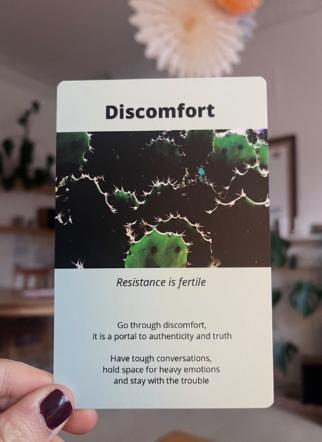
[Own picture from my Cards for Life dec].
After waking up and failing to fall asleep again, I got up and drew a card from one of my decks. The card was “Discomfort.” It felt almost too accurate—a clear invitation to name what I was feeling: the discomfort of stepping out of my comfort zone to offer this workshop.
I was introduced to Gloria Anzaldúa’s work by Dr. Karen Serra Undurraga—my teacher at the time, my supervisor now—during one of my PhD classes in Health in Social Sciences at the University of Edinburgh in 2023. Since then, Anzaldúa’s autohistoria-teoría has not only become the methodology for my dissertation, but I have also designed and led several workshops based on her work.[1] These had always taken place within my school, among people already familiar with her work, most of them with a background in counselling studies. Importantly, many were also familiar with post-qualitative research through academic spaces like the Center for Creative Relational Inquiry (CCRI).
Accepting GLARN’s invitation meant stepping into a different space. I expected participants from varied backgrounds—some even outside academia—and imagined that those within academia might be working with more “traditional” approaches. My invitation was to spend an afternoon together (which, as it turned out, was a very sunny one in Glasgow) exploring the concept of Borderlands as proposed by Anzaldúa, and thinking about our own work through that lens.
Anzaldúa was a Chicana writer, poet, activist, artist, lesbian, and academic whose life was an ongoing effort to bring together the pieces of her inner sense of fragmentation. Born in a geographical borderland—the border between the US and Mexico—her work explored and challenged borders of all kinds. Writing about the concept of Borderlands, she said:
“the psychological borderlands, the sexual borderlands and the spiritual borderlands are not particular to the Southwest. In fact, the Borderlands are physically present wherever two or more cultures edge each other, where people of different races occupy the same territory, where under, lower, middle and upper classes touch, where the space between two individuals shrinks with intimacy” (Anzaldúa 1987).
Her writing embodies this questioning: across languages, genres, artwork, critical theory, and mystical knowledge, exploring culture, identity, race, and social justice.[2]
Inspired by Anzaldúa’s sharp challenges to the “unnatural” boundaries she identified in the structures around her—academia, feminist activist spaces, Chicano spaces, spiritual spaces—I conceived this workshop as a space to question our own: Which boundaries do we encounter in our research? How do they shape our work? What kind of world do they produce? How might making them more porous support the social transformations we believe in?
Let me give some examples, in case this feels too abstract. As researchers, when are we hiding parts of ourselves that feel essential to our work? Why do we do it—and are there alternatives that would allow us to feel more coherent? What kinds of changes might emerge, even small ones, if we did something differently? Perhaps it has to do with our writing style. Or with publicly acknowledging that something we are doing comes from intuition, or from an insight we gained through meditation. Perhaps it has to do with moments in which we could be humble and honest enough to admit—despite being positioned as “experts”—that we don’t know, or that what we know comes from a nonlinear, messy, even mysterious process.
What kinds of stories about knowledge and expertise are produced through each of these small decisions—of making something visible or not?
These questions are not new to academia. During my PhD, for example, I encountered the concept of reflexivity, long present in anthropology and closely related to the concerns I raise here. Yet this invitation to question ourselves—especially within spaces of power such as academia—has a long genealogy within feminisms.
I have engaged in this kind of reflection throughout my life, but I was not taught to do so in my formal studies. Consider my background: 18 years ago, I began studying economics, later completing a Master’s in Economics and a Master’s in Public Policy. In none of these spaces was I encouraged to appear in my own work or to critically reflect on my positionality.
However, when I think about my work in peacebuilding and social dialogue in Colombia in recent years, my personal story becomes inseparable from my practice. In particular, my shift from a worldview grounded in modernity’s separations (human/nature, mind/body, science/spirituality) to one rooted in the interbeing (a concept that speaks to Buddhist radical interconnectedness), shapes how I position myself today—as both a dialogue practitioner and a researcher.
Thankfully, my PhD opened a door into decolonial and feminist scholarship—ideas such as situated knowledge, standpoint theory, strong objectivity, and double consciousness. Anzaldúa’s concept of “mestiza consciousness” is one among these—a consciousness that emerges from “creating a new mythos, a change in the way we perceive reality, the way we see ourselves, and the ways we behave” (Anzalduá 1987). I find her inspiring because she didn’t only write about transformation, she showed how to behave differently and so created transformation (my research is proof of this). I wonder how much discomfort she went through considering she was writing almost fifty years ago—daring to theorize the world through her personal stories, poems, imagination, dreams, spirituality, and body.
I am used to asking myself questions about borders, and I have grown more comfortable discussing them with people working in spaces similar to mine, such as my School at the University of Edinburgh. But bringing these questions into a group that included PhD students—as well as lecturers!—in Law, Education, History, International Relations, Politics, Anthropology, and Health, alongside dancers, counsellors, and storytellers, felt daunting. No wonder I was waking up in the middle of the night, gripped by fear.
Even though I feel more than confident in the journey that took me from a Master’s dissertation grounded in econometrics —using Instrumental Variables and Nonparametic methods—, to an autohistoria-teoría, I still experience the tension of speaking about shifting paradigms in a world that insists on fixed structures. It remains uncomfortable.
And yet, having facilitated this workshop—and feeling deeply satisfied with how it unfolded—I now find joy in writing this reflection. Participants shared in ways shaped by their own stories and fields. There was a shared recognition of borders—especially those within academia that determine what is considered “serious” and thus visible, and what is dismissed and rendered invisible.
The workshop, like this text, was too short to fully explore the richness that emerged across such diverse backgrounds. People situated their reflections within education, health, inequality, identity, and conflict. Across all these fields, adopting a critical decolonial lens inevitably surfaces tensions with dominant academic standards. If we take pluriversality seriously, how do our research practices align with onto-epistemological difference? Are we truly creating space for it within academia? Are we creating a pluriversal academia, or simply writing about it?
This is just one example, but similar questions arise when we think about legal frameworks, school curricula, community engagement, storytelling, or even our writing styles.
I initially thought the title of the workshop—“Rewriting reality with Gloria Anzaldúa”—sounded too ambitious. But hearing participants say they felt “provoked,” that they were thinking about “alternatives,” that they felt “inspired” to do something differently, made me reconsider. Perhaps the name is fitting after all.
The discomfort of questioning what is, and of pushing it toward what could be, is deeply creative… just as my card suggested in the early hours of that Monday morning.
I’m reminded of Buddhist nun Pema Chödrön’s words: “start where you are.” I’m grateful to GLARN for offering a space where I could share that discomfort creatively, alongside others willing to do the same. We are living in times that ask exactly this of us.
[1] The linked article is not open access. In case you need, please contact me (Juliana.ramirez@ed.ac.uk) so that I can share it.
[2] For anyone interested in reading more about Anzaldúa’s theories, I suggest reading: “The Anzaldúan Theory Handbook” by AnaLouise Keating.
Bibliography
Borderlands/La Frontera: The New Mestiza. By Gloria Anzaldúa. San Francisco: Aunt Lute Books, 1987.
Law and Political Imagination in El Rojo Más Puro: Thinking of Social Transformation Beyond the Language of Rights
By Julieta Lobato
On 16 October 2025, colleagues from the GLARN network (Irene Piedrahita, Emilia Arpini and Antonio Ivan Sanchez Hervas) organised, together with the collective Cinemaattic, a film screening of the documentary ‘The Deepest Red’ (El Rojo Más Puro) by Yira Plaza O’Byrne. In this documentary, Yira reconstructs the militancy of her father, Luis Alberto Plaza, a teacher and trade union leader who became a key figure in the Patriotic Union (Unión Patriótica), a left-wing party in Colombia that gained prominence in the mid-1980s but was decimated due to the persecution and assassination of its leaders. Luis Alberto Plaza survived this. The documentary places the militancy of Luis Alberto and the relationship between him and Yira at centre stage. Beyond this specific case, the film invites reflection on broader historical processes in Latin America.
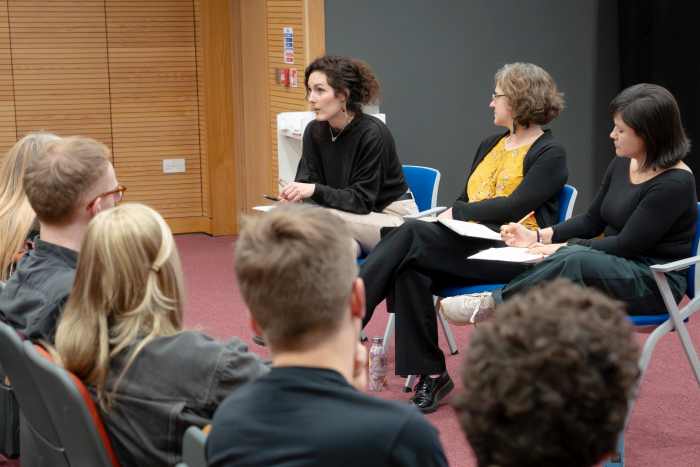
Image credit - Esteban Zapata Paez
Literature in the field of memory studies continually reminds us that the ways we look at the past and the questions we ask about it are always situated within a specific present. This means that the ways in which societies make sense of and elaborate on what has happened to them are always constructed from the specific circumstances of the present in which that inquiry is formulated. From this standpoint, the documentary triggers an interesting first question: How can revisiting the struggles of the 1970s help us better understand processes currently unfolding in Latin America? One dimension of this question, which features prominently in the documentary, pertains to the role of the law in projects of social emancipation.
Projects of social emancipation – the fight for a more equal and just society – are consistently highlighted throughout the documentary. The film is filled with references to utopian thinking: ‘They were carrying, without knowing it, a dream that went beyond their own lives;’ ‘Love humanises the world. Capitalism destroys love;’ ‘The importance of having an ideal of society to fight for;’ I felt I was part of a whole capable of changing the world.’ These references are used by Yira to reconstruct the militancy of her father and her own militant trajectory. However, the documentary also navigates through the process of exhaustion of those utopian energies. Yira soon becomes disillusioned with leftist movements in Colombia, perceiving them as merely competing against each other to show ‘the deepest red in the revolution.’ El rojo más puro.
Despite Yira’s skepticism, Luis Alberto seems to cling to utopian imaginaries. He states, ‘According to the circumstances, wherever there is a movement defending rights, I’ll be there. What else can I do?’ In this way, Luis Alberto emerges as a representation of a certain type of militant: A person involved in the insurgency movements of the ‘70s, who eventually had to go into exile and returned to Colombia where he found himself lost amid what he perceived as an extremely depoliticised society. As a spectator, one wonders what transpired in between. This is precisely where the portrayal of law in the documentary provides some clues.
Law appears in the documentary at two specific moments: once at the very beginning and again at the end. At the outset, law emerges when the documentary showcases Luis Alberto's books. We see, for example, books by Lenin, books on imperialism and Latin America, and among them, a book on human rights. This is a powerful aesthetic decision. If we agree with Rancière that aesthetics encompasses the political operations that organise our perception – aesthetics as the distribution of the sensible – then the choice to present law in this particular manner is no coincidence. It illustrates that for those movements of the ‘70s, law and forms of legality were integral to the intellectual universe of these emancipatory movements. In other words, law was conceived as part of a broader agenda for political transformation.
Law reappears towards the end of the documentary, which concludes by explaining that after 30 long years of litigation, the victims finally received the reparation they deserved through a ruling of the Inter-American Court of Human Rights (Corte IDH, Caso Integrantes y Militantes de la Unión Patriótica vs. Colombia, 27 July 2022). Again, this representation of the law is significant. It signals a happy ending. The spectator – who has been taken through the violent repression of emancipatory movements in Colombia for over an hour – can now rest assured, knowing that, no matter how much suffering and no matter how much violence, the law will eventually provide justice. It will always come to save us. We will always have the law. This is exactly where the documentary raises critical questions about the role of the law in social transformation.
Albeit with notable differences, the processes of democratic transitions that occurred in many Latin American countries in the 1980s and 1990s shared one common feature: the idea that social transformation must be achieved not through political mobilisation, but by institutional reform, and particularly through interventions in and from the legal arena.
This operated under the assumption that utopias had to be replaced by the language of rights. In the post-genocidal era in Latin America, therefore, the revolutionary subject is replaced by a subject of rights. In other words, the central political subjectivity is that of a legal subject, and a very specific kind of this: a victim. A subject who does not conquer rights or fight for a more equal society, but rather demands reparation from the State. By replacing utopias with rights demands, law allows us only to read society as composed of victims and perpetrators – the other side of that binary. All social relations are consequently characterised not by antagonism and solidarity, but by harm and responsibility.
Both identities – victim and perpetrator – are constituted through their relationship with the past. A victim is someone who suffers from something that has happened previously, while a perpetrator is someone who committed a crime or an illegal act in the past. At most, these identities project themselves into the present by claiming reparation today or establishing responsibility today for a harm caused in the past. However, under no circumstances can these identities – specifically that of the victim – project themselves into the future. The language of the victim/perpetrator, therefore, appears as depoliticising; it does not allow for the articulation of a horizon of social transformation. There is no project for a more equal society that can be built upon the identities of victimhood and perpetrator, wherein social relations are framed solely in terms of harm and responsibility.
Going back to the idea of the construction of the past from a specifically situated present, what this documentary enables us to contemplate is that relying only on the law to channel processes of social transformation in post-genocidal Latin American societies has left us with no political vocabulary to articulate a project of social emancipation. What was once considered part of a project of social emancipation – let’s recall the way that law appears at the beginning of the documentary – has now produced a totalising and demobilising effect. Law, in itself and by design, is unable to produce emancipatory imaginaries.
Fast-forwarding to the present, it is through this lens that we can understand, for instance, the exhaustion of the emancipatory energies of Chile’s 2019 social uprising following the failure of the constitutional reform in 2023, the ambivalent character of Colombia’s recent peace processes, or even the rise of right-wing authoritarian regimes with broad popular support, as exemplified by Milei in Argentina. Although these are distinct phenomena, a common thread among these historical processes is the prominent role of law and the tensions between legal equality and material inequality. Therefore, there is an urgent need for critical and systematic evaluation of the limitations of the language of rights to comprehend society and to articulate political projects. This is one of the many relevant reflections that El Rojo Más Puro leaves us with.
'The River is Life' by Mo Hume and Allan Gillies
For communities living along the Río Atrato in Chocó, Colombia, ‘the river is life’. Rivers play a central role in the cultural, economic and social life of the people of Chocó, as a means of transport, a source of livelihood and an actor in daily life. However, gold mining, linked to Colombia’s long-running internal conflict, has caused devastating social and environmental damage along the Atrato.
We are all Guardians of the Atrato
Bernandino Mosquera, a human rights defender and community leader from the Atrato, came to Glasgow in February 2018. He travelled as part of a delegation of Colombian human rights defenders and academics to raise awareness about the Colombian Constitutional Court Ruling, T-622. This landmark ruling recognised the Atrato river as a bearer of rights.
It also identified the rights of communities to physical, cultural and spiritual survival, guaranteeing their traditional livelihoods on the Atrato. Local communities worked with national and international development organisations to help achieve the Constitutional Court Ruling T-622.
Founded on the idea of a sustainable socio-environment, this new paradigm of rights in Colombia has been expressed as ‘bio-cultural’ rights: demanding the river’s ‘protection, conservation, maintenance and restoration’ and the safeguarding of the rights of communities. The ruling calls on the Colombian state to ensure these rights are enforced, as well as empowering local people to manage their river and participate in the implementation of T-622.
As part of this process, Bernandino was elected to be one of 14 ‘guardians’ of the Atrato. Drawn from local people, the Guardians will represent the communities in pressuring for the full implementation of the ruling.
T-622 ‘Denounces the complete abandonment of the state in terms of basic infrastructure in the region.’
Bernandino and the other guardians face major challenges. The Atrato’s abundant precious metal deposits have made the river a target for a range of different groups. They look to exploit the Atrato for financial gain, through both legal and illegal means. In recent decades, alluvial gold mining has become closely interwoven with the internal conflict.
Armed groups have sought control of lucrative mining operations. This mining has not only devastated the river itself, but the social fabric of river communities. Toxic metals used in mining, aggressive dredging and widespread deforestation have had deeply damaging effects on traditional farming and fishing, while different armed groups control and terrorise communities - especially those who attempt to stand up for their rights.
‘The humanitarian crisis has worsened’
The historic 2016 peace accord with the FARC – the largest guerrilla group in Colombia – promised to bring the country’s internal conflict to a close. While some progress has been made with the implementation of the accord, the security situation in Chocó has worsened. Violence has increased as the remaining armed groups have moved to capture territory vacated by the FARC. The Colombian Human Rights Ombudsman has signalled the region’s ‘particular vulnerability due to location on areas of strategic interest for legal and illegal actors’. These interests include control of lucrative gold mining operations along the Atrato.
Not only is Chocó Colombia’s poorest department, it has been one of the most affected by the armed conflict. In this ethnically diverse region, almost 60% of inhabitants live below the poverty line and 34% in extreme poverty. This is more than six times the poverty level of the country’s capital Bogotá.
Social organisations and human rights defenders have characterised the situation in Chocó as an ongoing ‘humanitarian crisis’. The crisis is manifest in ongoing violent confrontations between different armed groups over territory and resources, continued displacement of communities due to the violence, and the lack of access to sustainable livelihoods for many of the department’s inhabitants.
Local community organisations have responded to the crisis by renewing calls for dialogue between different groups in the conflict - a process that has been frustratingly slow and difficult process. Human rights defenders and community leaders face daily threats in their struggle to bring the case of the Atrato to world attention.
The number of human rights defenders targeted across Colombia has risen dramatically, with 330 social leaders killed in Colombia between 1st January 2016 and 26th July 2018. To put this into context, every third human rights defender killed in the world in 2017 was Colombian. In Chocó, violence increased. In December 2017 and the Prosecutor’s Office declared that homicide rates increased by as much as 230% in 2017, the first year following the peace agreement.
Building lasting peace
Progressive legislation, such as T-622, and ‘historic peace accords’ are only meaningful if implemented. The thousands of displaced citizens in Chocó and throughout Colombia are a violent manifestation of the record of non-implementation in Colombia. T-622. Together with the peace process, it provides a unique opportunity to build the scaffolding of peace - the rule of law, and recognition of and respect for bio-cultural rights.
Without the inclusion of historically excluded communities in the political process, the danger of non-implementation, the persistence of conflict and the production of new problems are high. The guardians of the Atrato and human rights defenders like Bernandino confront these risks, as they seek the physical, cultural and spiritual survival of their communities.